WORK · 2026-09-21 · research · systems
Ossidiana
A deduction engine Jay builds at night. You give it premises and rules. It infers, and it writes down how it got there. It is not a product, and it is not allowed to become one.
Jay writes software for a living. At night he works on something he will not ship.
Ossidiana is a research engine for pure deduction. You give it a set of premises and a set of rules. It draws conclusions, and it keeps a trace of every step so you can see how it got there. That is the whole machine. There is no chat product, no plugin marketplace, and no slide that needs a capability list by Thursday.
Most systems sold as “AI architectures” in 2026 are tool graphs with a model sitting on top. Browse the web. Send mail. Call a plugin. Charge a card. The graph is the product. The model is a guest.
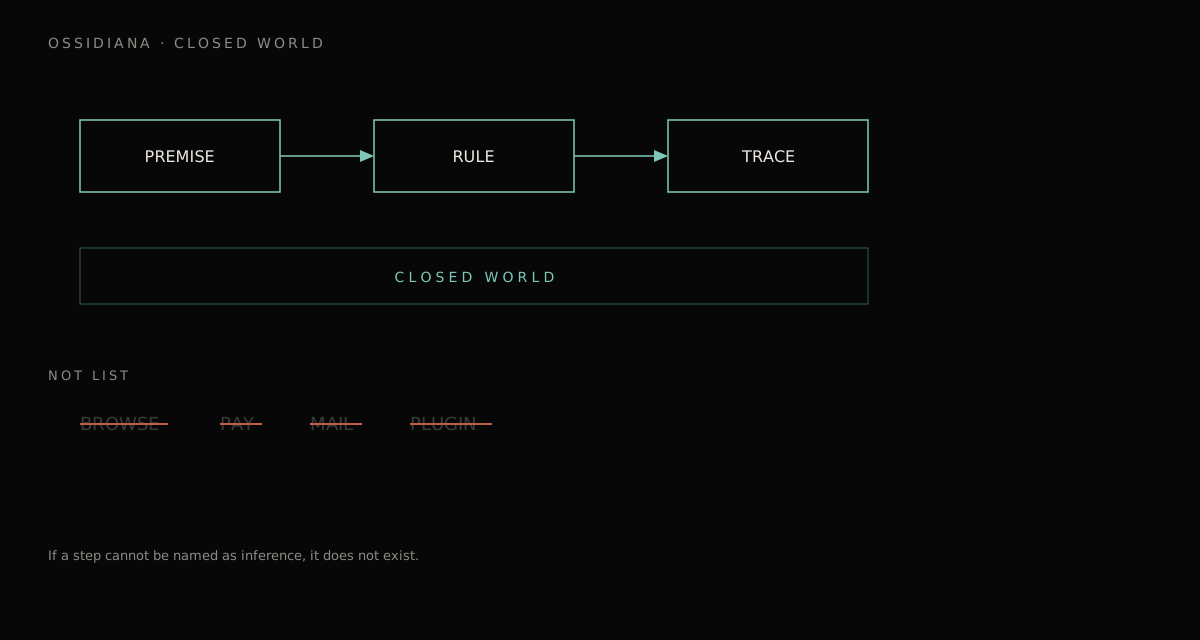
Ossidiana is the opposite bet. Intelligence is not a pile of useful side effects. If a step cannot be named as inference, it does not exist. The figure is the spec: the live nodes are premise, rule, closed world, and trace. The struck nodes are browse, pay, mail, and plugin.
A closed world, here, means the engine is only allowed to use what you put in. It cannot wander off to the internet for a missing fact. That is a constraint, not a missing feature. If it ever ships, it will already have lost — shipping is how a constraint becomes a feature list.